
Know When Your Home Is Quietly Wasting Money (Air Leaks & Insulation)
 Most homeowners think high utility bills are “just how it is.” Nope. A lot of the time, your house is basically leaking air like a screen door on a submarine.
Poor insulation, old weather stripping, and tiny gaps around windows and doors slowly drain money every single month—and you never see it happening.
If certain rooms are always hotter or colder, or your furnace seems to run nonstop, that’s your clue. A quick DIY check with a candle near window frames or an inexpensive energy audit can reveal problem spots fast. The fix is often cheaper than expected, and the payoff shows up every month on your utility bill. Comfort goes up. Bills go down. That’s a win.
The Candle (or Incense) Near the Window Test — What You’re Really Looking For
The candle test is one of the simplest, old-school ways to detect air leaks, and it still works like a charm. On a cold or windy day, hold a lit candle (or better yet, an incense stick which has less fire, more smoke) near window frames, door trim, electrical outlets on exterior walls, and baseboards. What you’re watching for isn’t just the flame going out — it’s movement.
If the flame flickers, bends, or the smoke suddenly streams sideways, that’s air infiltration. Translation: your heated or cooled air is sneaking out, and outdoor air is sneaking in. Even small, barely noticeable movements matter. A tiny leak running 24/7 all winter adds up to serious energy loss and uncomfortable drafts. Pro tip: test multiple spots around the same window or door , corners and seams are usually the worst offenders.
When Insulation Is Telling You It’s Had Enough
Insulation doesn’t last forever, even though it likes to pretend it does. Homeowners often assume insulation is “set it and forget it,” but age, moisture, pests, and settling can turn good insulation into expensive decoration.
Common warning signs include rooms that are always colder or hotter than the rest of the house, high energy bills with no clear explanation, ice dams forming on the roof in winter, or walls that feel cold to the touch. If you peek into your attic and see insulation that’s thin, patchy, compressed, or looks like it’s been stomped on by raccoons (because it probably has), it’s time to consider adding or replacing it.
Homes built 15–30+ years ago are especially guilty here, insulation standards were lower, and materials degrade. Adding insulation doesn’t mean a full gut job either, many attics and wall cavities can be upgraded without tearing your house apart.
Adding vs. Replacing Insulation — What’s the Difference?
Sometimes you can just add insulation on top of what’s there, and sometimes you absolutely should not. If existing insulation is dry, clean, and evenly distributed, adding more on top can be a cost-effective upgrade.
But if insulation is wet, moldy, rodent-infested, or severely compacted, adding more just buries the problem. Moisture-damaged insulation loses its effectiveness and can create air quality issues. In those cases, removal and replacement is the smarter long-term move, even if it stings upfront.
Sealing Small Gaps Around Windows and Doors (Yes, Weatherstripping Matters)
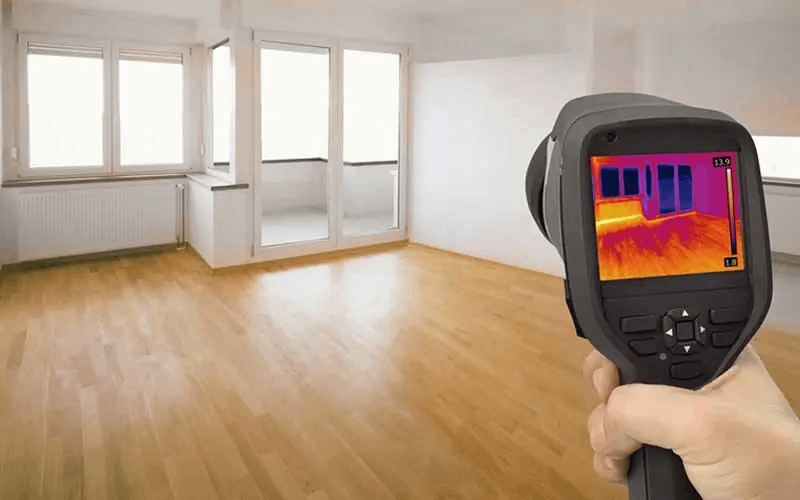
Before you even think about replacing windows, seal what you already have. You’d be amazed how many drafts come from gaps smaller than a pencil. Weatherstripping is cheap, fast, and one of the highest ROI fixes a homeowner can do.
Look for daylight around doors, feel for drafts with your hand, or use that same candle test. Adhesive foam weatherstripping works well for door frames and window sashes, while V-strip (tension seal) is great for double-hung windows. Door sweeps on the bottom of exterior doors are another big win — if you can see light, air is definitely moving.
For stationary cracks or trim gaps, a quality exterior-grade caulk is your friend. If the gap is bigger than a quarter inch, foam backer rod plus caulk gives a cleaner, longer-lasting seal.
The Big Picture — Small Fixes, Big Payoff
Here’s the part most homeowners underestimate: air sealing and insulation work together. You can have great insulation, but if air is leaking around it, you’re still losing efficiency. Think of insulation like a winter coat — it works best when the zipper is closed.
Taking a weekend to test for drafts, seal gaps, and inspect insulation can noticeably improve comfort, reduce energy bills, and even extend the life of your HVAC system. And unlike flashy upgrades, these fixes quietly pay you back every single month.